
Gulf states turn to private foreign military specialists amid Iran attacks

Gulf countries that have come under fire from Iranian missiles and drones are seeking private military personnel and technicians, two people familiar with the issue told Middle East Eye.
Iran’s attacks on strategic assets such as military sites and energy infrastructure, as well as cities, in the United Arab Emirates, Bahrain, Kuwait and Qatar prompted these countries to re-evaluate their defence capabilities, with many Iranian projectiles continuing to hit buildings and energy facilities.
Tehran launched the attacks in response to the joint US-Israeli war on Iran that began on 28 February.
US President Donald Trump openly said that he seeks regime change as he gloated over the success of killing more than 40 high-ranking Iranian officials in one air raid, which included the supreme leader, Ali Khamenei.
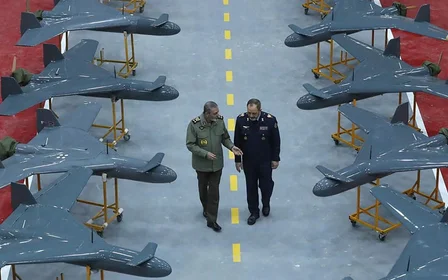
Even though the Gulf has various air defence systems that are effective against ballistic missiles, Iranian Shahed drones, being small and hard to detect on radars, can evade them. Only a layered air defence system can be effective against these low-cost drones.
New MEE newsletter: Jerusalem Dispatch
Sign up to get the latest insights and analysis on Israel-Palestine, alongside Turkey Unpacked and other MEE newsletters
While the UAE is operating Terminal High Altitude Area Defence (Thaad) systems, Qatar, Bahrain and Kuwait use both Patriot air defence systems and the more advanced PAC-3 MSE interceptor.
The Gulf countries have begun seeking radar operators, ground maintenance crews, ground security teams and electronic warfare systems specialists who are capable of providing protection during active operations, according to the people familiar with the private military industry.
They are also seeking pilots, the sources said.
These demands have been communicated through intermediaries to certain private military companies.
“I cannot speak about the specific countries requesting personnel, but from Europe the demand is primarily for system specialists,” one of the sources told MEE.
“However, this is more of a forward-looking move rather than a response to the current situation.”
Another source within the sector, who has agreed to work with one of the Gulf countries, said that many retired American and British military or intelligence advisers and private personnel have proven ineffective in light of recent developments.
As a result, Gulf countries are now seeking personnel from Muslim-majority countries such as Pakistan, Egypt and others, while most of the positions to be opened in Europe will be for engineers and systems specialists.
'First priority is defence'
“Their first priority is defence,” the source said, adding that the Gulf countries had become seriously aware of their systemic shortcomings.
“Their second priority is the logistics and maintenance component of air power, along with a limited number of pilots with operational experience.”
Both sources emphasised that the process is less about finding an immediate solution and more about taking precautions now against potential future challenges.

A third person familiar with the matter said that Gulf countries are also exploring secondary systems compatible with US systems, as well as smaller kill-web ones capable of supporting them.
A kill-web system is a network that combines intel and warfare capabilities across different domains, including land, sea, air and cyberspace.
The source added that, while not necessarily questioning the effectiveness of the American protective umbrella, there are complaints regarding its scope.
“The personnel being sought are expected to be compatible with this framework. Training someone from scratch to reach the level required for these systems is both very time-consuming and very expensive, and it is clear that these countries do not have that kind of time,” the second person familiar with the issue said.
“Therefore, research has already begun into personnel who have previously worked on or are currently working with such systems and who can undergo short-term re-generation training.”
The source criticised Gulf countries for placing excessive trust in American and British advisers and systems and for operational complacency.
“They believed they were completely secure. They were not open to any criticism on this matter. They rejected dozens of proposals. Now, our phones will not stop ringing,” the source said.
Middle East Eye delivers independent and unrivalled coverage and analysis of the Middle East, North Africa and beyond. To learn more about republishing this content and the associated fees, please fill out this form. More about MEE can be found here.