
In first week of war on Iran, Gulf states shutter energy production and oil soars

Oil prices made a historic surge during the first week of the US-Israeli war on Iran as Gulf states shuttered energy facilities.
Brent, the international oil benchmark, has surged 28 percent in the first week of the war, trading at $92.66 per barrel on Friday.
While oil remains below the $120 per barrel price it hit after Russia’s 2022 invasion of Ukraine, the rally has been faster and more brutal as traffic through the Strait of Hormuz, the waterway through which around 20 percent of the world’s oil and gas passes, grinds to a near halt.
Oil and gas facilities in the Gulf are shuttering.
The Financial Times reported on Friday that energy-rich Gulf states could review their overseas investments amid financial pressure from a halt in energy exports.
New MEE newsletter: Jerusalem Dispatch
Sign up to get the latest insights and analysis on Israel-Palestine, alongside Turkey Unpacked and other MEE newsletters
US President Donald Trump heralded trillions of dollars in investment pledges by Gulf states last year, when he visited the region in May 2025 and hosted Saudi Arabian Crown Prince Mohammed bin Salman at the White House in November.
Kuwait, one of the top oil producers in the Opec energy alliance, is shutting down production because it is running out of storage space, The Wall Street Journal reported on Friday.
Meanwhile, the WSJ cited data from Kpler, an energy analytics firm, which said the UAE and Saudi Arabia would also have to stop production due to hitting storage limits.
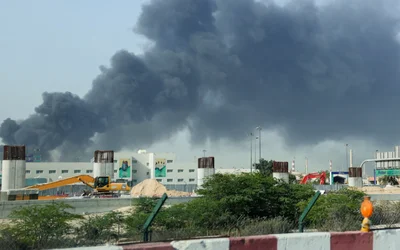
Iran has been targeting energy infrastructure in the Gulf.
On Thursday, Bahrain said that an Iranian missile hit the country’s biggest oil refinery in Sitra. The facility has a processing capacity of around 380,000-400,000 barrels of oil per day. Video on social media showed the facility engulfed in flames.
The production shutdown is also being driven by the de facto closure of the Strait of Hormuz, with countries unable to export the oil they produce and storage tanks filling up.
Iran has sent mixed signals about whether it has closed the strait, but major insurers have stopped issuing war-risk coverage for vessels transiting the waterway.
Late on Friday, a spokesperson for the Iranian Revolutionary Guard Corps challenged Trump to send US vessels to escort oil tankers in the Strait of Hormuz, in response to the US president's suggestion this week that the US could take that option.
Threats to global economy
Just nine oil tankers, cargo and container ships have been recorded as crossing the strait since Monday, according to MarineTraffic data.
Only the most intrepid vessel owners are still sending ships into the Persian Gulf, eyeing handsome returns from skyrocketing daily shipping rates.
Oil tankers have been hit.
A tanker at anchor off Kuwait’s coast was struck on Wednesday and was reportedly leaking oil into the Gulf.
Meanwhile, Qatar announced a force majeure on gas exports on Wednesday.
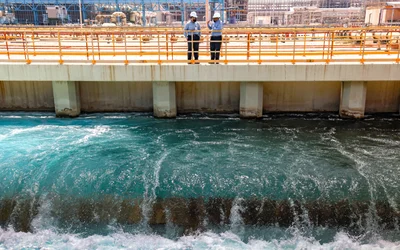
The country supplies around 20 percent of the world’s liquefied natural gas. Natural gas prices in Europe and Asia have soared since the US and Israel attacked Iran.
The Trump administration had touted the US’s energy independence, but US consumers are also feeling the pain. The average price of gasoline in the US hit $3.32 per gallon, rising around 11 percent compared to $2.98 per gallon last week, according to the motor club, AAA.
Qatar’s energy minister told the FT that the war could “bring down the economies of the world”, and predicted Brent rising to $150 per barrel as a result of production cuts.
“If this war continues for a few weeks, GDP growth around the world will be impacted. Everybody’s energy price is going to go higher. There will be shortages of some products, and there will be a chain reaction of factories that cannot supply,” he said.
The Gulf states lobbied Trump to strike a diplomatic deal with Iran. Their energy facilities and modern cities are bearing the brunt of Iran’s retaliation.
The Gulf states have effectively used US air defence systems to down Iranian drones and missiles, but they are running low on supplies. Middle East Eye was the first to reveal Gulf frustration with what was described as US “stonewalling” at requests to replenish supplies.
Middle East Eye delivers independent and unrivalled coverage and analysis of the Middle East, North Africa and beyond. To learn more about republishing this content and the associated fees, please fill out this form. More about MEE can be found here.